

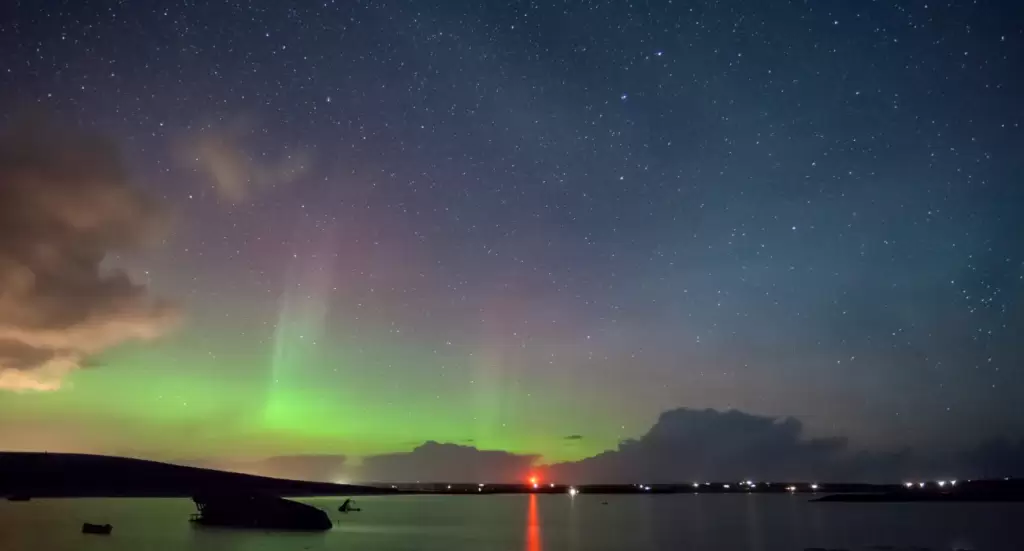
When night falls over the islands and the sea turns silver beneath the stars, there’s a chance you will be bathed in the Orkney Islands’ Northern Lights. Known locally as the Merry Dancers, they sweep across the horizon in ribbons of green, pink, and red, casting their glow over ancient stone circles and quiet coastal cliffs. Winter transforms Orkney into a front-row seat to one of nature’s rarest performances. Here, far from city lights, the skies come alive with colour, history, and a touch of island folklore. In this guide, you’ll learn what causes the aurora borealis, why Orkney is one of the best places to see it, and how to capture the lights for yourself. Spend your days exploring Neolithic wonders on our Orkney day tours, and your dark nights watching the heavens dance! The islands promise an experience that’s as unforgettable as it is otherworldly.
What Are the Northern Lights?
When it comes to witnessing nature’s greatest light show, aurora borealis, Orkney stands among the best places on Earth. This dazzling phenomenon occurs when charged particles from the Sun travel along Earth’s magnetic field and collide with gases high in the atmosphere. The result? Glowing ribbons of green, pink, and red that ripple and dance across the night sky.
Most displays appear near the magnetic poles, which is why Orkney’s northern latitude makes it one of the best places in Scotland to witness the spectacle. The colours depend on the gas involved: oxygen creates greens and reds, nitrogen produces blue and purple. While they may appear faint to the naked eye, long exposure photography reveals their full, vivid beauty.
Why Orkney Is Perfect for Watching the Aurora
Orkney offers some of the clearest, most dramatic skies in Britain, and it’s no coincidence. Its geography, culture, and untouched landscapes all make it one of the best places in the world to experience the aurora borealis.
An Ideal Latitude for the Lights
Orkney lies at the same northern latitude as southern Alaska and coastal Norway, placing it directly beneath the auroral oval, the zone where the Northern Lights most often appear. This means you don’t need to travel to the Arctic to see them; you’re already in prime territory.
Pristine Conditions and Open Horizons
The islands’ natural features create perfect viewing conditions:
- Low light pollution: minimal artificial glow means darker, clearer skies.
- Clean air: crisp northern winds bring clarity and depth to the night sky.
- Wide northern horizons: Orkney’s open coastal landscape gives uninterrupted views of the aurora’s glow.
- Unspoiled coastlines: reflections over the sea make every display twice as magical.
Some of the best viewing spots for the Orkney Islands’ northern lights include:
- Ring of Brodgar: ancient stones silhouetted against shifting green light.
- Brough of Birsay: a tidal island with sweeping northern views.
- Old Man of Hoy: dramatic sea stacks framed by celestial colour.
- Wideford Hill: a high vantage point with panoramic views across Mainland Orkney.
The Merry Dancers of Orkney
Locals have their own name for the lights: the Merry Dancers. Their flickering patterns have inspired island folklore for generations, often described as spirits or storytellers dancing across the heavens. Watching them feels like stepping into an old Orcadian legend: one where the sea, wind, and stars all play a part.
When to See The Lights
For those itching to be in awe of the northern lights Orkney, best-time-to-see dates, it’s from late September to March! Especially October through February, when nights are longest and skies darkest. Clear, still evenings after a storm often offer the best chances of success.
And if you’d like to pair your aurora adventure with Orkney’s coastal beauty, try one of our Boat Tours an unforgettable way to see the islands’ wild edges by day before the night sky comes alive.
How to See the Northern Lights in Orkney
Catching the aurora is part science, part patience, and in Orkney, it’s an experience in itself. The Merry Dancers appear when they choose, but with a little preparation, you can give yourself the best chance to see them.
1. Watch the Forecasts
Stay alert for geomagnetic activity using trusted sources:
These platforms post real-time updates and photos from locals, so you’ll know when the skies might come alive.
2. Pick the Perfect Night
Choose clear nights with little or no moonlight. Clouds and city lights can hide even the brightest displays. After storms, when the air is crisp and dry, conditions are often ideal.
3. Find a Northern View
Look for a spot with an open view to the north and minimal light pollution. Beaches, coastal cliffs, or hilltops work beautifully. Remember to switch off car lights and use a red torch, which preserves your night vision.
4. Dress for the Wait
The northern lights in Orkney are unpredictable, so bring:
- Layers of warm, waterproof clothing
- A blanket or camping chair
- A flask of tea or coffee
Sometimes the lights appear in minutes; other times, you’ll wait for hours, but in Orkney, the wait is never dull.
5. Enjoy the Winter Magic
While you wait, listen to waves crashing on quiet beaches, spot seal pups resting on the sand, or share stories under the stars. Winter here isn’t just a season… It’s a mood. The stillness, the chill, and the faint green glow on the horizon make the moment unforgettable.
For those who love to explore on foot, Orkney’s landscape is even more magical up close. Join one of our walking tours in Orkney to experience the islands’ history and wildlife!
Winter doesn’t silence Orkney’s wildlife; it simply changes the rhythm: grey seals linger on the coasts, otters hunt along kelp-lined inlets, and hardy seabirds fill the pale northern skies.
Experience the Northern Lights with Us
Experience the magic of the Orkney Islands’ Northern Lights as part of your winter adventure. Few places on Earth blend history and wonder quite like this, where Neolithic stone circles meet dancing skies, and every horizon feels alive with stories.
By day, explore the islands’ ancient past through our Orkney islands tours, uncovering sites such as Skara Brae, the Ring of Brodgar, and the Standing Stones of Stenness. Then, as night falls, step outside and watch the Merry Dancers shimmer above Orkney’s dark seas and quiet hills.