

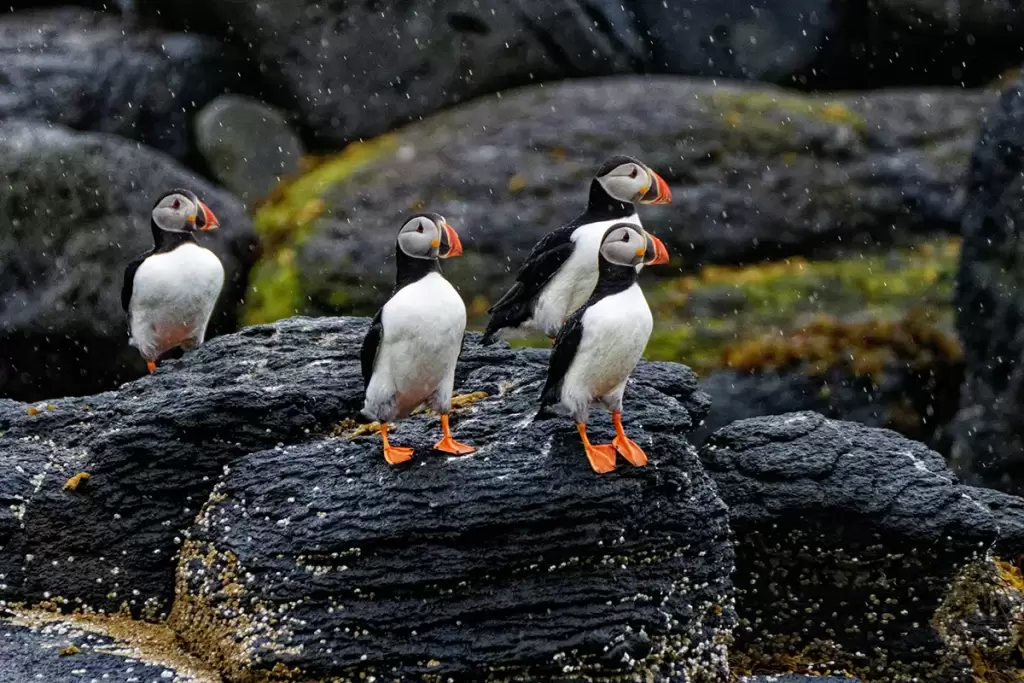
Want to spot Orkney Island puffins? You’re not alone. These seabirds – affectionately known as tammie norries in Orkney – are basically the celebrities of the cliffs: instantly recognisable with their technicolour beaks, bright orange feet, and an airborne style best described as “determined chaos.” It’s no wonder they’re nicknamed the clowns of the sea.
In this guide, we’ll cover everything you need to know about puffins on Orkney: the best places to see them (from Westray’s famous Castle o’ Burrian to the tidal island of Brough of Birsay), the best time to visit, fascinating puffin facts, and practical tips for a safe and unforgettable puffin-spotting adventure.
If you really want the inside scoop (and the best photo angles), we recommend booking one of our Orkney day tours – because puffins are adorable, but they don’t hand out tiny maps.
Where to See Puffins on Orkney
If you’ve come to the islands hoping to meet Orkney’s most charming residents, you’re in luck. Puffins on Orkney aren’t shy about turning up in the summer months – you just need to know where to look. From dramatic cliffs to tidal islands, these little “tammie norries” have impeccable taste in real estate.
Castle o’ Burrian (Westray)
If puffins had a five-star hotel, this would be it. The Castle o’ Burrian, a small sea stack off Westray, is the undisputed prime spot for puffin-spotting in Orkney. Hundreds of birds crowd the ledges here in summer, looking like they’re attending a particularly rowdy cliff-top cocktail party. Even better, they don’t mind people watching, which makes it heaven for photographers.
RSPB Marwick Head (West Mainland)
This reserve is a full-blown seabird city. Yes, you’ll see puffins here, but they share the neighbourhood with guillemots, fulmars, kittiwakes, and more. The cliffs west of Kitchener’s Memorial are the prime viewing area, and binoculars are a must if you want to pick out puffins from the throng. It’s Orkney wildlife at its noisiest, smelliest, and most spectacular.
Brough of Birsay (West Mainland)
The Brough of Birsay is a tidal island, which means timing is everything. Cross the causeway at low tide, wander out to the lighthouse, and you’ll find puffins nesting in the cliffs as if they’d booked the best sea views in the house. Just don’t forget to get back before the tide turns – puffins may like water, but you probably don’t want to be stranded in it.
Noup Head (Westray)
At Noup Head, it’s the gannets who steal the show – thousands of them. But tucked among the chaos, puffins can also be spotted darting back and forth with their signature sand-eel deliveries. The lighthouse here makes a fine backdrop, but the real stars are the birds in their cliff-side metropolis.
Hoy (Old Man Cliffs)
Yes, Hoy is famous for the Old Man of Hoy, that sky-high sea stack beloved by climbers and painters. But while you’re staring at the rock formation, don’t miss the puffins nesting on the cliffs around it. Pair them with the odd sea eagle sighting, and you’ve got a wildlife show that makes Netflix look boring. If you fancy a trip, check out our Hoy war history tour!
Papa Westray (Head of Moclett)
Papa Westray offers some of the most personal puffin encounters in Orkney. At the Head of Moclett, these birds seem less fazed by humans than anywhere else, letting you get remarkably close (without disturbing them). Bring your camera, because this is puffin photography paradise.
Other Puffin-Friendly Spots
Still hungry for more puffins on Orkney? Mull Head (East Mainland) offers dramatic cliff walks where puffins pop up among the seabird crowd. Stronsay also has colonies worth a detour if you’re exploring further afield. Check out our Orkney walking tours for a puffing-friendly experience!

When is the Best Time to See Puffins in Orkney?
Timing, as with comedy and puffin-spotting, is everything. These birds spend most of their lives bobbing about on the open sea, only coming ashore for a few precious months each year to breed. If you want to catch them on Orkney’s cliffs, you’ll need to plan carefully.
The puffin season runs from April to August, but the sweet spot is May to July. That’s when puffins are nesting, dashing back and forth with beaks full of sand eels, and generally being the stars of Orkney’s seabird colonies. Think of it as their summer residency – a feathered festival with front-row seats still available.
By July, you might be lucky enough to see pufflings (yes, that’s the official name, and yes, it’s impossibly adorable). These fluffy chicks eventually leave their burrows under the cover of night, wobbling their way to the sea for the first time like tiny explorers off on a grand adventure.
Miss this window, and you’ll be left staring at empty cliffs while the puffins are back out at sea, living their other life as mysterious ocean wanderers. In short: come in summer, bring binoculars, and prepare for a show that’s short, seasonal, and utterly unforgettable.
Fun & Fascinating Facts About Orkney Island Puffins
If Orkney had a mascot, it would surely be the puffin. Known locally as the Tammie Norrie, these little “clowns of the sea” are instantly recognisable with their technicolour beaks, orange feet, and a flying style best described as “determined chaos.” But behind the cartoonish looks lies a bird with some rather impressive talents.
Masters of the Burrow
Puffins don’t just perch on cliffs; they dig into them. With their strong orange feet and sturdy bills, they tunnel cosy homes into grassy slopes. Occasionally, they’ll even kick rabbits out of their own burrows and move right in – a hostile takeover, puffin-style.
Gourmet Fisherbirds
Dinner is usually sand eels, the puffin’s version of fine dining, with the occasional sprat or herring for variety. Their hunting style is part ballet, part torpedo: they ‘duck dive’ from the surface, flapping their wings underwater like they’ve forgotten they’re birds. Evolution has given them the perfect toolkit for the job — thick, jagged-edged beaks and backwards-facing spines on the roof of the mouth that help them hold on to entire mouthfuls of slippery fish. The record? A mind-bending 83 sand eels at once. That’s not just multitasking — that’s performance art.
Dressed to Impress
That striking orange bill? It’s only for summer. Puffins actually moult away the bright outer layer in winter, swapping glamour for a duller, more practical look while at sea. Think of it as packing away the tuxedo until party season comes round again.
Lifelong Lovers
Puffins usually mate for life, returning to the same burrow year after year. To reaffirm their bond, they perform a ritual called “billing” – clacking their beaks together like castanets in a strangely romantic, slightly noisy way.
Pufflings (yes, really)
Each pair raises just one chick a year, affectionately called a puffling. Covered in downy grey feathers, pufflings stay hidden in the burrow until one fateful night in July or August when they toddle off toward the sea, guided by moonlight. It’s an epic first step into a life mostly spent on the waves.
Sociable Seabirds
Puffins are party animals – in the avian sense. They only settle where other puffins already are, forming bustling seabird colonies alongside guillemots, razorbills, fulmars, and kittiwakes. New colonies are rare because if there aren’t puffins already, the newcomers just aren’t interested.
So yes, they may look like comic-book characters, but puffins are also extraordinary survivors – divers, fliers, parents, and fine neighbours – perfectly adapted to both cliffside chaos and the endless ocean.
Practical Tips for Seeing Puffins on Orkney
Spotting puffins on Orkney is pure joy, but a little preparation (and a lot of respect) makes it even better.
- Stay safe: Clifftops can be crumbly, and tides at places like the Brough of Birsay wait for no one. Always stick behind fences, mind your footing, and double-check tide times.
- Mind your manners: Keep low, stay quiet, and resist the urge to point or wave – puffins are surprisingly tolerant of humans, but too much fuss can spook the whole colony. And no matter how cute they look, please don’t try to pet a puffin. They’re seabirds, not plush toys.
- Timing is everything: Puffins spend mornings fishing, so evenings are prime time to see them loafing about on the cliffs, beaks full of sand eels.
- Pack like a pro: Binoculars and a camera are a must, sturdy shoes are non-negotiable, and Orkney’s ever-present wind means a good jacket will be your best friend.
- Remember the neighbours: Puffins share their cliffside condos with guillemots, razorbills, fulmars, and kittiwakes – so while you’re here for the clowns of the sea, take a moment to admire the supporting cast.
Conclusion: Puffins, Perfected in Orkney
Orkney Island puffins give you history, scenery, and comedy all rolled into one feathery package. From Westray’s puffin-packed Castle o’ Burrian to the tidal adventures of Brough of Birsay and the sweeping cliffs of Marwick Head, every site is a front-row seat to nature’s best slapstick show.
To get the most out of your visit, time your trip between May and July, bring binoculars, and maybe let a local guide do the navigating. After all, puffins may be the clowns of the sea, but Orkney itself is the full stage – a place where every tide and every wingbeat tells a story.